
The pipes that freeze in Chicago are the ones in unheated or exterior-wall space: hose bibbs, crawl spaces, garages, unheated basements and vacant units. Before the first hard freeze, disconnect hoses, drain and shut exterior spigots, insulate exposed runs and seal drafts at pipe penetrations. During a cold snap, keep heat on and cabinet doors open.
Which pipes actually freeze in a Chicago building?
Water inside a heated, occupied part of the building almost never freezes. The failures we get called about are in the spaces people forget: the hose bibb on the back of the house, supply lines running through a crawl space or an unheated garage, pipes in a joist bay along an exterior wall, and lines in a vacant unit where the heat was turned down to save money.
Chicago's older housing stock makes this worse in a specific way. Additions, enclosed porches and finished basements often have water lines run through framing that was never insulated for winter service. A line can sit there fine through three mild winters and then split during the first stretch of single-digit nights.
Wind matters as much as the number on the thermometer. A drafty rim joist or an open foundation vent moves cold air directly across a pipe. Sealing the draft is often more effective than adding another layer of foam over the pipe.
The pre-freeze checklist you can finish in an afternoon
Start outside. Disconnect every garden hose and drain it before you store it. A hose left attached traps water in the bibb, and that water freezes first and pushes back into the wall. If you have an interior shutoff for the exterior spigot, close it, then open the spigot outside to drain the line and leave it open through winter.
Next, walk the unheated spaces with a flashlight. Note every water line you can see in the crawl space, garage, attic and along exterior basement walls. Foam pipe sleeves on those runs are inexpensive and go on in minutes. Pay attention to elbows and valves, which usually get skipped.
Then seal the air. Look for daylight and drafts where pipes, dryer vents and cables pass through the foundation or rim joist, and close those gaps with caulk or canned foam. Close foundation vents in a crawl space if the building is designed for that. Confirm the garage door closes fully, since a gap at the bottom is enough to drop a garage below freezing overnight.
Finally, find your main water shutoff and make sure it turns. If the valve is seized, that is a repair worth making in October, not at 11 p.m. in January.
What to do during a cold snap
Keep the thermostat at a consistent temperature day and night. Setting back ten degrees overnight saves a little on gas and costs you the margin that keeps a wall cavity above freezing. Watch the local forecast from the https://www.weather.gov/lot/ (National Weather Service Chicago office) so you know when a hard freeze or a wind chill advisory is coming.
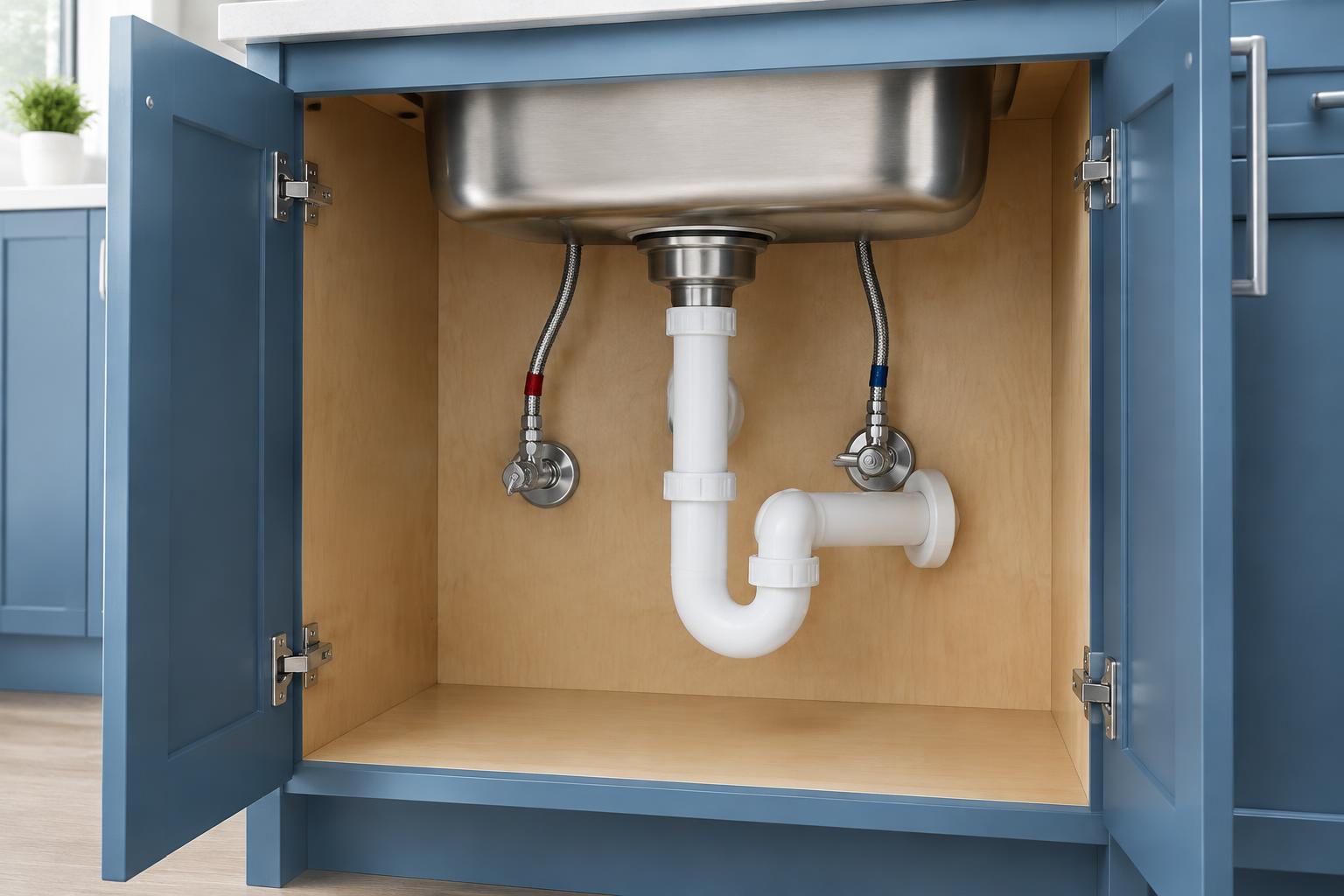
Open the cabinet doors under kitchen and bathroom sinks that sit on exterior walls so room air reaches the supply lines. If you have small children or pets, move any cleaners out of those cabinets first.
On the coldest nights, let a thin trickle of cold water run from the faucet farthest from where the water enters the building. Moving water is harder to freeze, and an open faucet relieves the pressure that builds between an ice plug and a closed valve — that pressure is what splits the pipe, not the ice itself.
Commercial buildings and vacant units need a few extra steps
We handle residential and commercial work, and the worst winter damage we see is in buildings nobody was walking through. A vacant apartment, a storefront between tenants or a seasonal space can sit for weeks with a failed furnace and no one to notice.
If the building stays in service, keep heat on in every zone, including stairwells and storage rooms with water lines, and have someone physically check the building during extended cold. A remote thermostat or low-temperature alarm is worth installing before the heating season.
If a unit will be empty all winter, the safer approach is usually to shut the water off at the main and drain the system rather than relying on heat alone. That decision depends on the building — fire sprinkler systems, shared risers and multi-unit buildings each have their own requirements, so review it with your building's engineer or a licensed plumber before draining anything.
How to tell a pipe has already frozen — and what never to do
The most common sign is simple: you open a faucet on a very cold morning and get a trickle or nothing at all, while other fixtures run normally. Frost or condensation on a visible pipe, or a section that is bulged or discolored, points to the same thing. If only one fixture is affected, the ice plug is usually between that fixture and the last heated space.
If you find the frozen section and it is accessible, leave the faucet open and warm the pipe gradually with a hair dryer, a heat lamp or towels soaked in hot water, working from the faucet side back toward the frozen area. Keep electrical equipment away from standing water.
Never use an open flame — no torch, no propane heater aimed at framing. It is the fastest way to turn a plumbing problem into a house fire, and it can melt solder joints and plastic fittings you cannot see inside the wall. If you cannot reach the frozen section, or if the pipe is inside a finished wall, stop and call a plumber.
If a pipe bursts
Shut the water off at the main valve first. Everything else is secondary — minutes matter for how much drywall, flooring and stored property you lose.
Keep water away from electrical panels, outlets and appliances. If water is near the panel or you see sparking, do not wade in; shut power off at a safe disconnect if you can reach one, and call ComEd or 911 if you cannot.
Then document it. Photograph the damage before cleanup for your insurance claim, and start removing standing water and wet material so the building can dry. If the break affects the water service line between the building and the street, contact the https://www.chicago.gov/city/en/depts/water.html (Chicago Department of Water Management) — responsibility for that portion of the line is a city matter and worth confirming with them directly.
What Variety Pros can and cannot promise
We schedule by appointment, Monday through Saturday, Central time. We do not advertise guaranteed 24/7 emergency response, because we would rather tell you the truth than take a call we cannot staff. If you have an urgent situation, call (312) 585-6226 or email willisb245@gmail.com and we will tell you honestly what we can do and when. That is exactly why the prevention list above matters.
What we do well is plumbing issue review, fixture project planning and plumbing coordination on renovations, working with qualified trade contractors. In Illinois, plumbing is licensed to the individual rather than the company — the Illinois Department of Public Health requires licensure for people who install, alter, repair and maintain plumbing systems, which you can read about at https://dph.illinois.gov/topics-services/environmental-health-protection/plumbing.html — so it is fair to ask who specifically is doing the work on your property.
Pricing depends on scope, materials, site conditions, access and which trades are required. Every project is quoted after we review the property, and the written estimate identifies allowances, exclusions and who is responsible for permits.
Repairs worth doing now instead of in January
Some items are far cheaper in fall. A seized main shutoff, a dripping hose bibb, an uninsulated crawl-space run, a rim joist you can feel cold air pouring through, a basement bathroom on an exterior wall with no heat register — all of those are planned work in October and emergency work in January.
If a frozen-pipe scare last winter exposed a bigger problem, like water lines routed through an unheated addition, that is usually a remodeling conversation rather than a patch. We can look at it together with the rest of the scope through our general construction and remodeling work.
To get on the schedule, see our plumbing services page or reach out through our contact page. Tell us what you are seeing and where the building is, and we will set a time to look at it.
Frequently asked questions
At what temperature do pipes freeze in Chicago?
There is no single threshold, because it depends on wind, insulation, how long the cold lasts and where the pipe runs. A well-insulated interior line can be fine for days below zero, while an exposed bibb or a crawl-space run can freeze on the first night that drops below freezing. Watch the National Weather Service Chicago forecast and treat any extended freeze as a risk.
Should I leave the faucet dripping all winter?
No. Save it for genuine cold snaps — nights in the single digits or below, or extended stretches below freezing. A thin stream from the faucet farthest from the water entry is enough. Running water year-round wastes water and raises your bill without adding protection on mild days.
Does homeowners insurance cover frozen pipe damage?
Policies vary, and many require that you maintained heat in the building. Check your specific policy language before winter, and ask your agent what is expected if a property will be vacant. We cannot advise on coverage — photograph damage before cleanup and contact your carrier directly.
Do you offer same-day service when a pipe freezes?
We schedule by appointment, Monday through Saturday, and we do not guarantee same-day or emergency response. We do offer same-day or next-day estimates subject to availability, so call (312) 585-6226 and we will tell you plainly what the schedule looks like.
Do you work on commercial buildings, not just houses?
Yes. We handle residential and commercial construction and remodeling, including plumbing coordination in multi-unit and commercial properties. Scope, access and which trades are required all affect the plan, so we review the property before quoting.