
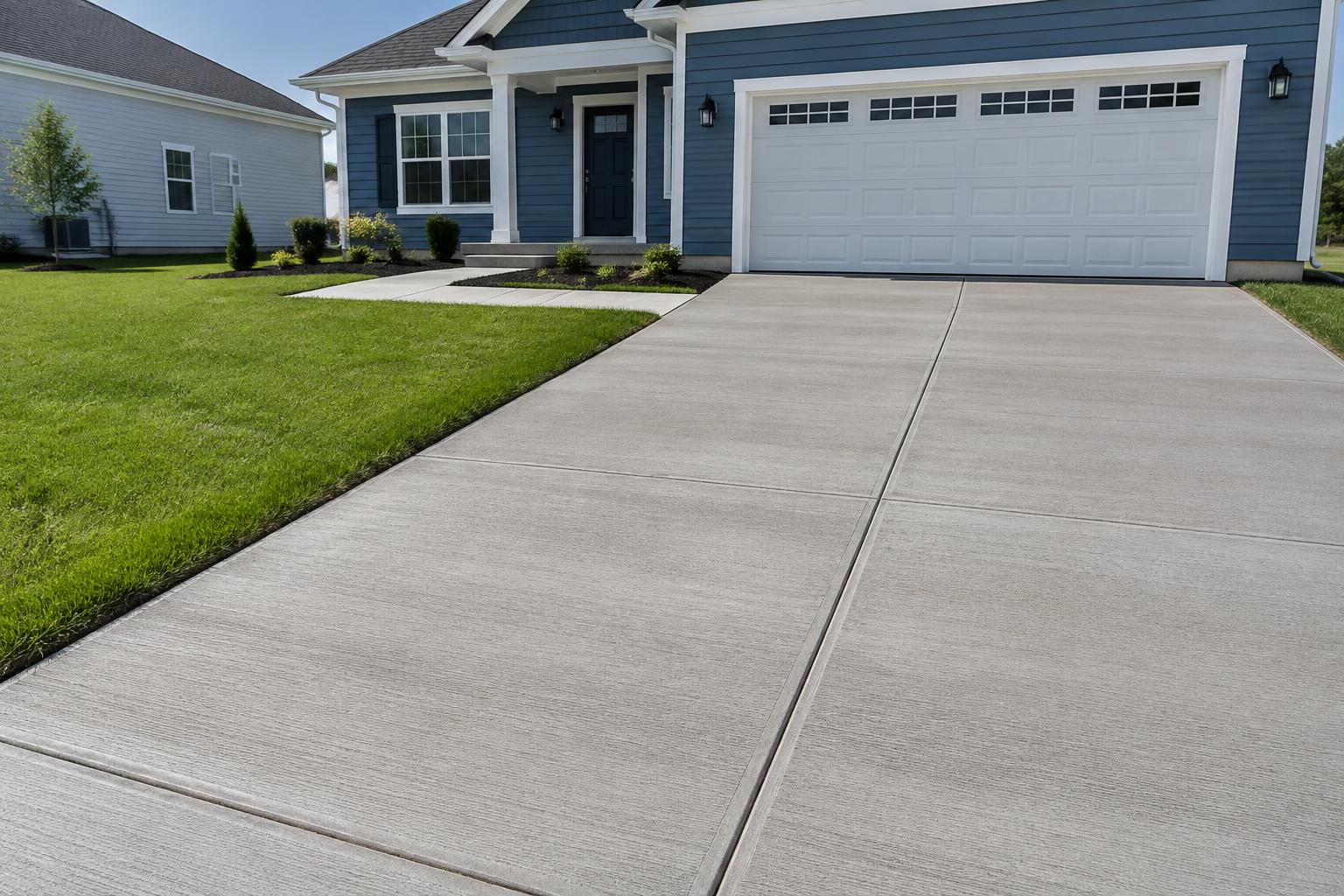
Yes, concrete can be poured in cold weather around Chicago. Industry guidance treats cold-weather concreting as a normal practice with added requirements: protect the fresh concrete from freezing, keep it warm through early curing, and never place on frozen ground. Those protections add cost and schedule risk, so some scopes are better held for spring.
Is it too late to pour concrete in Chicago in late fall?
Not automatically. The flat answer homeowners usually get — "we're done for the year" — is a scheduling answer, not a technical one. Industry guidance from the Portland Cement Association and the National Ready Mixed Concrete Association treats cold-weather concreting as a recognized practice with specific protection requirements, not something that stops on a calendar date.
What changes in late October and November around Chicago is that the risk moves from the pour itself to the days immediately after it. Fresh concrete gains strength through a chemical reaction that slows as temperatures drop, and concrete that freezes before it has gained enough early strength can be permanently damaged. Industry guidance is to protect new concrete from freezing until it has reached sufficient early strength, and to keep it warm long enough for that to happen.
So the real question is not "can it be poured" but "can this site be protected properly, and is it worth the added cost and risk versus waiting." That answer is different for a garage slab than for a driveway, and different for a sheltered side yard than for an exposed corner lot.
What counts as cold-weather concreting?
Industry definitions key off sustained low ambient temperatures rather than a single cold night. Once average daily temperatures stay low enough for long enough, a job is treated as a cold-weather pour and the extra measures become part of the scope rather than an optional add-on. In the Chicago area, that generally applies from late fall through early spring, with stretches in October and April that can go either way.
The practical effect is that the concrete mix, the placement day and the protection plan all get decided together. A contractor who quotes a November pour the same way they would quote a July pour is not accounting for the difference.
It also means the weather forecast becomes part of the schedule. A pour planned for a week with a hard freeze three nights out is a different job than one with a mild stretch ahead, even if the two days look identical on the calendar.
How is concrete protected in cold weather?
The methods are well established and described in industry guidance from the Portland Cement Association and NRMCA. Insulating blankets laid over the finished surface hold in the heat the concrete generates as it cures. Temporary enclosures with heaters are used where blankets alone will not hold enough warmth, particularly on vertical work and on exposed sites. Ready-mix suppliers can heat mixing water and aggregates so the concrete arrives warm.
Mix adjustments also come into play — accelerating admixtures and mix designs intended to gain strength faster in cold conditions. These are decisions made with the supplier for the specific pour, not a blanket setting.
All of this costs money and labor. Blankets, enclosures, heaters and the extra site visits to monitor and remove protection are real line items. On a written estimate they should appear as part of the scope with any allowances and exclusions spelled out, so you know what you are paying for and what happens if the weather turns.
Why the ground underneath matters more in late fall
Concrete should not be placed on frozen ground. Frozen subgrade heaves and settles as it thaws, which can crack a slab that cured perfectly well. That is one of the firmest rules in cold-weather guidance, and it is the most common reason a late-season pour gets postponed on site rather than at the estimate.
Late fall in the Chicago area also brings saturated ground. A base that is soft and waterlogged from October rain does not compact the way it needs to, and a slab is only as stable as what sits under it. Clay soils common across the south and west suburbs hold that moisture longer than you would expect.
Drainage is the third issue, and the one homeowners regret missing. Once there is snow on the ground, you cannot see where water currently runs, where it pools against the foundation, or how the finished surface needs to pitch. Site and access review and drainage planning are part of how we scope a concrete project, and they are harder to do well under snow cover.
Which concrete scopes handle late-season work better?
Smaller, protectable pours are the easier call. A garage slab, a small patio, a landing or a stoop can be blanketed or enclosed without an enormous protection setup, and the surface area to keep warm is manageable.
Large flatwork is harder. A full driveway is a lot of exposed square footage to protect for the full early-curing period, and the finishing window gets tricky when temperatures are falling. If you are weighing surface materials for a driveway at the same time, our breakdown of concrete versus asphalt in the Chicago area covers that side of the decision.
Footings and foundation work sit below grade and are a different conversation again — depth, frost line and the excavation schedule all factor in, and that scope needs to be looked at on the specific property rather than generalized in a blog post.
When can you drive on or use new concrete?
There is no honest generic number, and anyone giving you one over the phone in November is guessing. How long before you can walk on it, park on it or load it depends on the mix used, the temperature the concrete actually held during curing, how it was protected, and what you intend to put on it.
Cold conditions slow strength gain, which usually means waiting longer than you would for the same pour in summer. The protection may also need to stay in place for a defined period after placement, and removing it too early can undo the benefit.
Follow the instructions you are given for your specific project — including any restriction on de-icing salts during the first winter — rather than a timeline you read somewhere. We give return-to-use guidance for the concrete that was actually placed on your property.
Should you book now or wait for spring?
Three questions usually settle it. First, how long can your access be disrupted — a driveway pour that ties up your parking for an extended protection period in December is a different inconvenience than one in May. Second, does the surface carry vehicles or just foot traffic. Third, does waiting actually cost you anything, such as an unsafe step, a failing slab or work that has to finish before another trade can start.
If nothing is urgent and the scope is large, spring is often the better value simply because you are not paying for protection. If something is unsafe or is holding up the rest of a project, a protected cold-weather pour is a legitimate option worth pricing.
We scope concrete projects with a site and access review, drainage and surface planning, and a walk through finish options, and we confirm what is workable after seeing the property — not before. You can read more on our concrete work page or call (312) 585-6226. We work by appointment Monday through Saturday and serve Chicago along with South Holland, Orland Park, Tinley Park, Bolingbrook, Schaumburg, Oak Brook, Oak Park and Park Forest. Pricing depends on scope, materials, site conditions, access and the trades required, and every project is quoted on site with allowances and exclusions written out.
Frequently asked questions
Will a cold-weather pour cost more than the same job in summer?
Usually yes, because blankets, enclosures, heating and the extra site visits to place and remove protection are real labor and material costs. How much more depends on the size of the pour, how exposed the site is and how long protection has to stay on. We price it on the specific scope and put the protection items in the written estimate.
What happens if new concrete freezes?
Concrete that freezes before it has gained enough early strength can suffer permanent damage, which is why industry guidance centers on protecting fresh concrete from freezing and keeping it warm through early curing. That is the entire reason cold-weather protection exists, and it is not a step worth skipping to save money.
Can you pour on ground that is already frozen?
No. Industry guidance is clear that concrete should not be placed on frozen subgrade, because the ground moves as it thaws and can crack the finished slab. If we arrive and the base is frozen or too saturated to compact properly, postponing is the right call.
Can I still get an estimate for concrete work this time of year?
Yes. Estimates are scheduled by appointment Monday through Saturday, and we do offer same-day or next-day estimates subject to availability — call (312) 585-6226 to confirm. Even if the work waits for spring, getting the site reviewed now means drainage and access are planned before snow covers the grade. You can also reach us through our contact page.
Does a late-season patio or driveway need to be sealed before winter?
Sealing timing depends on the mix, the finish and the curing conditions, so it is decided for the specific pour rather than by a general rule. We give sealing and de-icer guidance for the concrete actually placed at your property as part of handing the work over.