
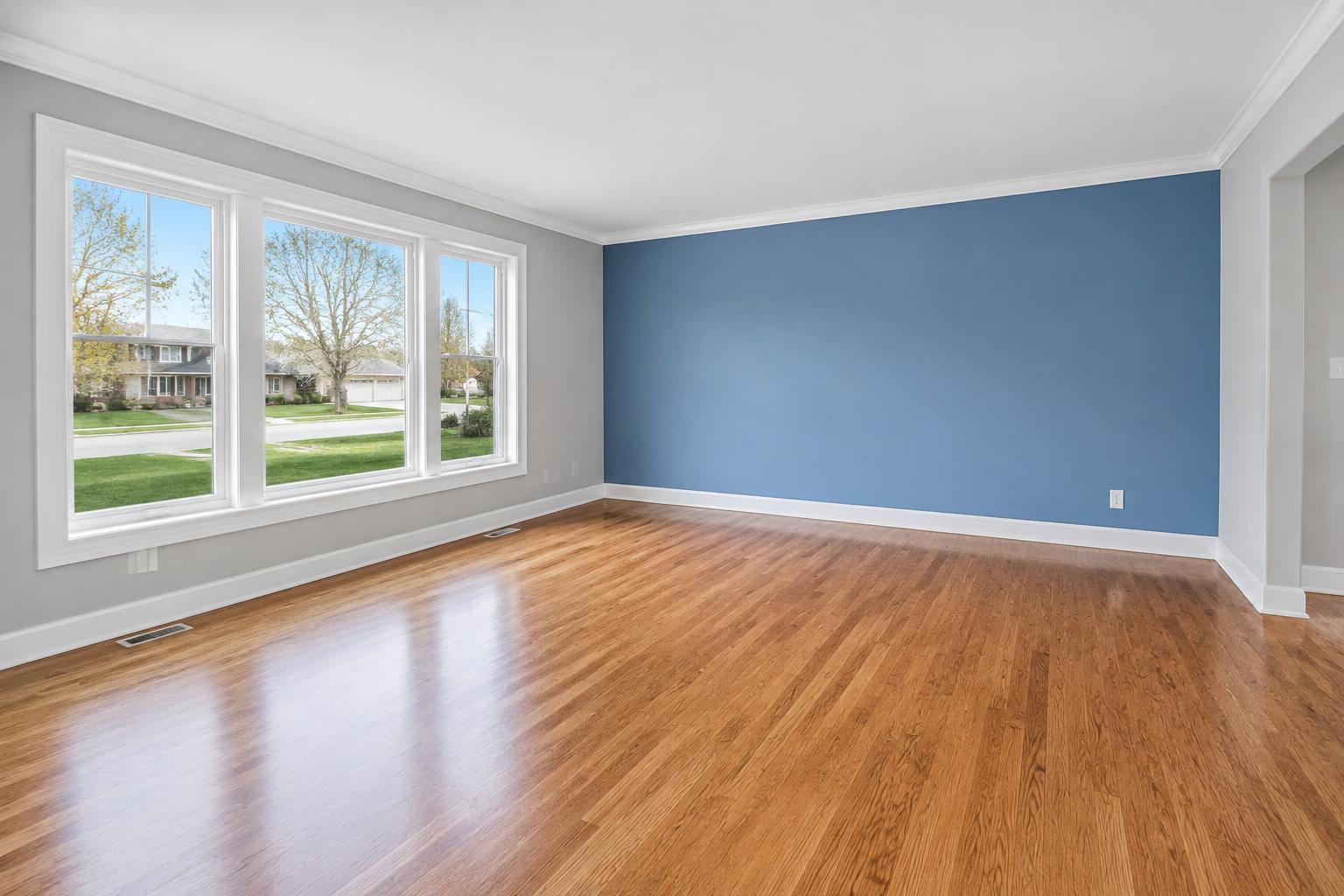
In a Chicago winter, interior painting is the practical choice and exterior coating work generally waits for a stable weather window. Exterior coatings depend on air temperature, surface moisture and dew point, not the date. Interior rooms can be scheduled year-round. Timing still has to be confirmed for your specific project and site conditions.
Why exterior painting depends on the weather, not the calendar
Exterior coatings do not care what the date is. They care about the temperature of the air and the surface, how much moisture is in the siding or trim, and how close the air is to the dew point when the coating goes on and while it dries. In Chicago, late October through March rarely gives you a run of days where all of those line up, and a cold snap or a heavy dew overnight can undo a day of work.
The risk with pushing an exterior job too late is that the problems do not show up right away. A coating applied to a damp or too-cold surface can look fine in November and then peel, blister or lose adhesion the following spring. At that point you are paying twice: once to strip the failed coating and once to repaint.
That is why we talk about a weather window rather than a season. If there is a stretch of mild, dry weather in the fall and the surfaces are sound and dry, some exterior work may still be possible. Whether your project fits that window is something we confirm after looking at the property and the specific coating involved, not something we can promise over the phone.
What exterior work can still be assessed in the cold
Even when the coating itself has to wait, the assessment does not. Walking the exterior in the cold months tells us a lot: where caulk has opened up, where trim has soft spots, where water is running off the roof onto a wall it should not be hitting, and where old paint is already failing. None of that is easier to see in June.
Getting that review done over the winter means the scope, the surface preparation and the coating selection are settled before spring. When the weather turns, the job starts instead of starting with a site visit. Surface preparation planning and color and coating selection are both part of how we handle a painting project, and they can happen months before anyone opens a can.
If the exterior review turns up something structural — rot behind trim, a roof edge dumping water, masonry that needs attention — that is a separate conversation about scope, and we would rather have it in January than in April.
Why winter suits interior painting
Interior painting is indoor work, so the weather outside mostly affects whether we can get to you, not whether the job can be done. Schedules are generally more open in the colder months than in the spring and summer rush, which gives you more say in when rooms are taken out of service.
Winter is also when a lot of other indoor work is happening. If you are in the middle of a bathroom update, trim replacement or a larger remodel, painting usually belongs at the end of that sequence, and coordinating it with the rest of the work saves you a second round of furniture moving and masking. We handle painting alongside other trades as part of general construction and remodeling, so it can be sequenced with the rest of the scope rather than booked as a separate event months later.
The other practical point: you are inside the house more in winter. The rooms you have been meaning to deal with are the ones you are looking at every day.
Ventilation and drying time when the windows stay shut
The honest trade-off with interior painting in a Chicago winter is air movement. You are not leaving windows open in February, so ventilation has to be handled deliberately — short periods of cracked windows where it is tolerable, fans moving air toward an opening, and keeping doors to unpainted areas closed so odor does not travel through the whole house.
Drying and recoat timing also shift when the air in a heated house is dry and still in some rooms and humid in others, like a bathroom. That usually means planning for the coating to need its time rather than rushing a second coat, and it affects which rooms we take on which days.
If anyone in the house is sensitive to paint odor, say so before the estimate. It changes which coatings we recommend and how we stage the work, and it is much easier to plan for up front than to work around mid-job.
How to prepare your home before the crew arrives
Before work starts, we go through furniture, valuables, access and any surface repairs that need to happen first. Small items, wall hangings and anything breakable are best packed away by you — nobody wants a crew deciding what is fragile. Larger furniture usually gets moved to the center of the room and covered.
Access matters more in winter than in summer. We need to know where to park, which door to use, whether there is a lockbox or a stairwell key, and whether a condo or building has freight elevator hours or a certificate of insurance requirement. Sorting that before the first day avoids losing a morning to it.
Protection and cleanup responsibilities are written into the estimate so there is no ambiguity about who covers what, who moves what and what condition the room is left in at the end of each day. If something is unclear in the estimate, ask before you sign it.
What actually drives the schedule
Square footage is the number people quote, but it is rarely what decides the timeline. Surface preparation does. Walls that need patching, old glossy trim that needs scuffing, previous coatings that are failing, water stains that need sealing, wallpaper that needs to come off — all of that happens before the first coat and can take longer than the painting itself.
After preparation, the drivers are the size of the area, the coating requirements for the surface, and the number of colors and cut lines. For exterior work, weather gets added to that list, which is exactly why fall exterior jobs carry more schedule risk than interior ones.
We give you a timeline after we have seen the surfaces, and we would rather give you an accurate one than a flattering one. Every project is quoted on site; nothing about the schedule or the price is settled before someone has looked at the rooms.
Booking an estimate
Variety Pros LLC is a general construction and remodeling company based at 205 N. Michigan Ave., Suite 800 in Chicago, working across the city and suburbs including Oak Park, Orland Park, Tinley Park, Schaumburg and South Holland. You can see the full list on our service areas page.
We work by appointment, Monday through Saturday. We are currently offering same-day or next-day estimates — availability has to be confirmed when you call, so ask for the soonest slot and we will tell you what is open.
Call (312) 585-6226 to set up a walkthrough, or send the details through the contact page. If you want both interior work this winter and exterior work in the spring, we can review both in one visit.
Frequently asked questions
Can I paint the outside of my Chicago house in November?
Sometimes, but it depends on a stable mild, dry stretch and on the surfaces being dry and sound — not on the date. We would need to look at the property and the coating involved before saying yes. If the window closes, the safer plan is to finish the assessment and preparation now and schedule the coating for spring.
Will my house smell like paint for days in winter?
Odor lingers longer when windows stay shut. We manage it by sequencing rooms, closing off unpainted areas, moving air toward an opening where the temperature allows, and choosing coatings with that in mind. Tell us before the estimate if anyone in the house is sensitive to paint odor.
Do I need to move out while rooms are painted?
Usually no for a room-by-room interior job. Most people keep living in the house and shift between rooms as work moves through. Whether that works for your layout is part of what we go over at the walkthrough, along with access, pets and daily start and stop times.
Should painting come before or after other remodeling work?
After, in almost every case. Trim, fixtures, drywall repairs and tile work all create dust and damage that would mar fresh paint. If you have other work planned, tell us at the estimate so painting can be scheduled at the right point in the sequence instead of being redone.
How far in advance should I book interior painting for winter?
Earlier is better if you want specific dates, especially around holidays. We work by appointment Monday through Saturday and are currently offering same-day or next-day estimates, subject to availability — the estimate can usually happen quickly even if the work itself is scheduled further out.