
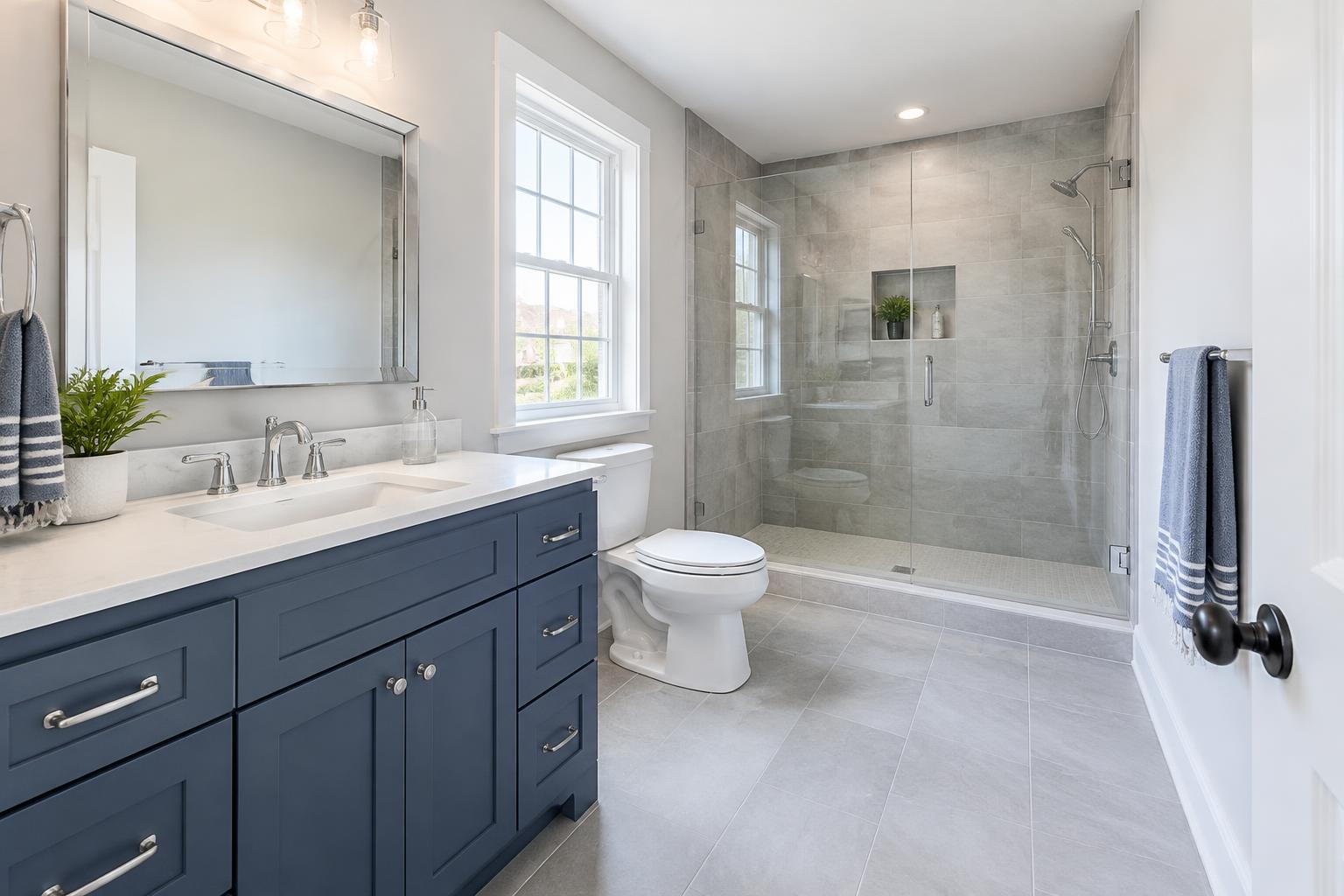
Published Chicago figures give a useful starting point: Sweeten reports roughly $15,000–$20,000 for a budget 5'×7' bathroom remodel and $21,000–$28,000 or more for mid-grade work. Your number depends on room size, whether plumbing moves, fixture selection and what is behind the walls. Every project is quoted on site.
What do published Chicago bathroom remodel figures actually say?
We don't publish price bands of our own, because a bathroom quote that is written before anyone has seen the bathroom isn't a quote. What we can point you to is what other Chicago cost guides report, so you have a frame of reference before we talk.
Sweeten's Chicago renovation cost guide puts a budget remodel of a standard 5'×7' bathroom at about $15,000–$20,000, and a mid-grade remodel at roughly $21,000–$28,000 and up. Block Renovation and Angi publish their own Chicago bathroom figures as well. Those are their numbers, not ours, and they change — check them at the source.
Treat any published range as a planning tool. It tells you whether you are in the right neighborhood for the project you have in mind. It cannot tell you what your bathroom costs, because it doesn't know your building, your floor, your access or your pipes.
What actually moves the number in a Chicago bathroom?
Six things do most of the work. Room size, because tile, waterproofing and labor all scale with square footage. Layout, meaning whether fixtures stay where they are or move. Fixture and finish selection, which has the widest spread of anything on the list. Waterproofing behind the tile. Ventilation. And hidden conditions, which is everything we find after demolition.
Chicago housing stock makes that last one matter more than it would in newer construction. Bungalows, two-flats and vintage courtyard buildings often have original cast iron waste lines, galvanized supply, framing that isn't plumb, and layers of old tile over old mortar beds. None of that is visible on a walkthrough. A good estimate accounts for the possibility rather than pretending it away.
Access is the quiet one. A third-floor unit with a narrow stair and no elevator costs more in labor and debris handling than a first-floor bathroom with a back door ten feet away. Parking and loading conditions on a dense street are part of the price too.
Why does moving the toilet or shower drain cost so much more than swapping fixtures?
Swapping a vanity, toilet and tub in the same positions is largely a finish job. The connections are where they were. The work is demolition, surface prep, setting and trim.
Relocating a fixture means opening the floor and reworking drain and vent lines. Drains run on slope, so moving a toilet or shower drain a few feet can mean new routing, new venting, and sometimes work in the ceiling of the room below. In a concrete-floor building that gets harder again. On the supply side you're adding new runs and patching finishes you didn't plan to touch.
That's why two bathrooms of identical size, with identical tile, can land in very different places. If budget is the controlling factor, keeping the existing layout is usually the single largest saving available. If the layout is the reason you're remodeling, it's worth it — just go in knowing it is a plumbing project and not a finish project.
How do you read a written estimate so the tile and fixture budget is real?
Two words decide whether an estimate means anything: allowances and exclusions. An allowance is a dollar figure carried for something you haven't picked yet — tile, vanity, faucet, lighting. If your estimate says the tile allowance is a specific amount per square foot and you choose something above it, the price goes up by the difference. That is not a surprise if the allowance was written down.
An exclusion is work the price does not include. Common ones are unknown conditions behind the walls, relocating existing plumbing or electrical that wasn't in scope, asbestos or lead handling, and permit fees. Exclusions aren't a red flag — unwritten exclusions are.
Our written estimates identify allowances, exclusions and who is responsible for permits before anything is demolished. If you're comparing bids, compare those sections first. A lower number with vague allowances usually isn't lower.
Do you need a permit for a bathroom remodel in Chicago?
It depends on the scope. Work that changes plumbing, adds or moves electrical, or alters structure is a different matter from replacing a vanity in place. The City of Chicago requires a general contractor license for most building construction, alteration and repair work in the city, and that license does not cover plumbing, electrical or masonry — those trades carry their own City licenses, which is why licensed trade contractors are coordinated on the project. You can read the City's own summary on the General Contractor License page.
We don't state permit requirements for your project until the scope is defined. Confirm with the City of Chicago Department of Buildings for your specific address and scope, and if you're in one of the suburbs we serve, the village building department sets its own rules and fees.
Permit responsibility — who pulls it and who pays the fee — goes in writing in the estimate. That avoids the most common argument on a remodel.
What should you agree on before demolition starts?
If it's your only bathroom, settle the access question first. How many days will it be out of service, what the plan is in the meantime, and what the working hours will be. In a condo or two-flat, add building rules: elevator reservations, work-hour restrictions, and how material and debris move through shared space.
Agree on the change-order process too. If we open a wall and find a rotted subfloor or a failed waste line, you should know in advance that we'll stop, show you, price the fix in writing and get your approval before continuing. Nobody likes that conversation, but it's worse when it happens verbally and shows up on an invoice.
Finally, have your selections as far along as possible before demolition. Waiting on a backordered tub is the most expensive kind of delay, because it stops everything behind it.
How do you get an estimate from Variety Pros?
Call (312) 585-6226 or email willisb245@gmail.com with your address, the size of the bathroom, and what you want changed — layout, fixtures, or both. Photos of the existing bathroom help. We currently offer same-day or next-day estimate appointments, subject to availability, so ask when you call.
We'll look at the room, the access, and what we can see of the existing plumbing and ventilation, then put scope, allowances, exclusions and permit responsibility in writing. You can see what our bathroom remodeling work covers, or send details through the contact page.
Variety Pros LLC is a general construction and remodeling company based at 205 N. Michigan Ave., Suite 800 in Chicago, working across the city and the suburbs listed on our service areas page.
Frequently asked questions
Can you give me a price over the phone?
No. We'll talk through scope and what published Chicago ranges look like, but we don't confirm pricing before assessing the property. Size, access, fixture selection and existing plumbing conditions change the number too much for a phone figure to be honest.
Is a small bathroom always cheaper to remodel?
Usually, but not always. Square footage drives tile and labor, so a smaller room costs less there. A small bathroom in a tight third-floor unit with old cast iron waste lines and a relocated shower drain can cost more than a larger, simpler one on the first floor.
How long does a bathroom remodel take?
It depends on scope, selections and lead times on fixtures and tile, so we give a schedule with the written estimate rather than a general number. Layout changes and permit-required work add time compared with a fixture-and-finish update in the same footprint.
Do you handle the plumbing and electrical yourselves?
We coordinate qualified, licensed trade contractors for those parts of the work. Chicago licenses plumbing and electrical separately from general contracting, and we confirm the right credentials for the specific scope before the work starts.
Do you remodel bathrooms outside the city?
Yes. We work in Chicago and in suburbs including Oak Park, Orland Park, Tinley Park, Schaumburg, South Holland, Bolingbrook, Oak Brook, Park Forest and Rosemont. Permit rules and fees are set by each village, so we confirm those per project.